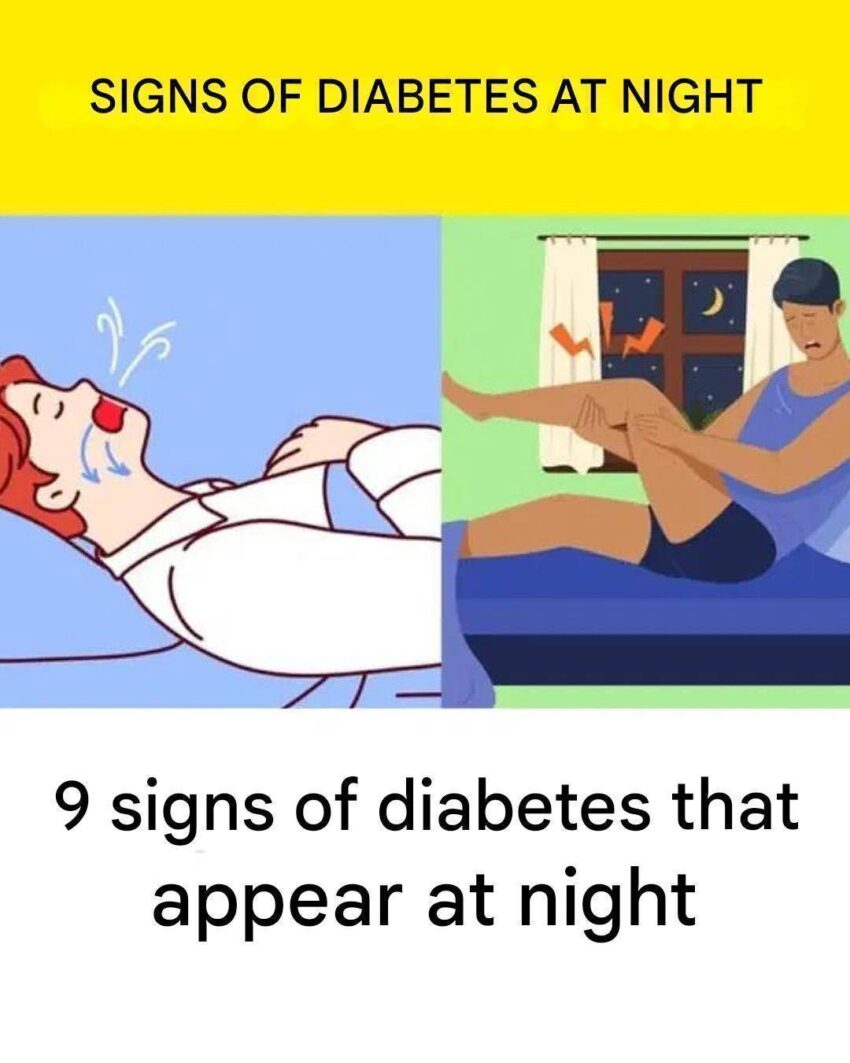
1. Frequent Nighttime Urination (Nocturia)
-
Why it happens: High blood sugar forces the kidneys to excrete excess glucose, pulling water with it.
-
Red flag: Waking multiple times to urinate can indicate uncontrolled diabetes.
-
What to do: Track fluid intake, monitor blood sugar, and consult a doctor.
2. Excessive Thirst at Night
-
Why it happens: Fluid loss from frequent urination triggers strong thirst, even during sleep.
-
Red flag: Constant thirst disrupting sleep may signal high blood sugar.
-
What to do: Keep water by the bedside, but get blood sugar checked.
3. Night Sweats
-
Why it happens: Fluctuating blood sugar, especially hypoglycemia, can trigger sweating at night.
-
Red flag: Waking drenched in sweat can indicate a drop in glucose levels (common in insulin users).
-
What to do: Monitor nighttime glucose; discuss medication timing with your doctor.
4. Tingling or Numbness in Feet
-
Why it happens: High blood sugar over time damages nerves (diabetic neuropathy).
-
Red flag: Tingling, burning, or numb feet felt at night.
-
What to do: Foot care is crucial; see a doctor for neuropathy management.
5. Leg Cramps
-
Why it happens: Nerve damage and electrolyte imbalances can cause painful cramps at night.
-
Red flag: Recurrent night cramps may indicate diabetes-related complications.
-
What to do: Stretch before bed, stay hydrated, and review blood sugar control.
6. Restless Legs Syndrome (RLS)
-
Why it happens: Poor blood sugar control and nerve damage can worsen nighttime leg restlessness.
-
Red flag: Inability to keep legs still, interfering with sleep.
-
What to do: Talk to a doctor about managing blood sugar and RLS treatments.
7. Frequent Nighttime Hunger
-
Why it happens: Blood sugar swings or insulin issues can trigger sudden hunger, even after dinner.
-
Red flag: Waking hungry multiple times a night.
-
What to do: Monitor carbohydrate intake and glucose levels; discuss diet adjustments.
8. Blurry Vision
-
Why it happens: High blood sugar draws fluid into the lens of the eye, temporarily changing vision.
-
Red flag: Blurry vision noticed at night or when waking.
-
What to do: Eye exam; maintain stable blood sugar.
9. Unusual Fatigue Upon Waking
-
Why it happens: Poor nighttime blood sugar control disrupts sleep quality and energy.
-
Red flag: Feeling unusually tired despite adequate sleep.
-
What to do: Track blood sugar overnight (especially if on insulin or diabetes meds).
Bottom Line
-
Nighttime symptoms often reveal uncontrolled or undiagnosed diabetes.
-
Keeping a sleep and symptom log alongside blood sugar monitoring helps doctors detect problems early.
-
Persistent signs should always prompt medical evaluation, as early intervention prevents complications.
I can also make a visual “nighttime diabetes symptom checklist” that you can use at home to track these 9 signs—super handy for catching problems early.
Do you want me to make that?
