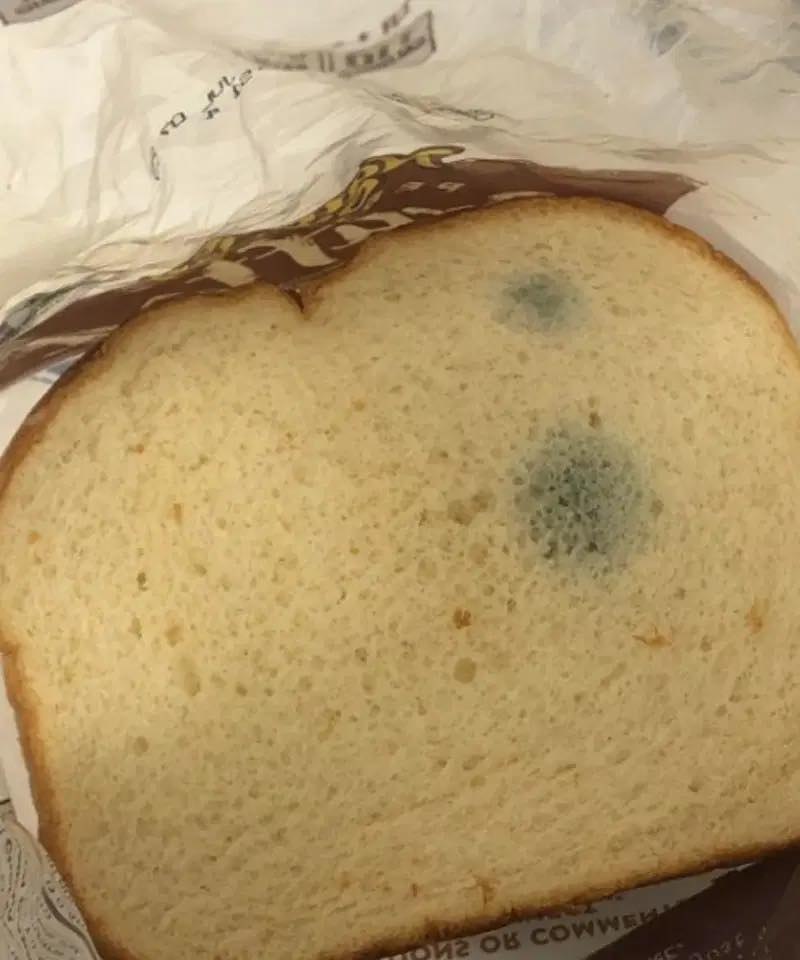
🍞 Why Bread Gets Moldy
Bread is moist and rich in nutrients, which makes it an ideal environment for mold. Mold spores are everywhere in the air, and when they land on bread, they can grow, especially if:
-
Bread is stored at room temperature for too long
-
There is humidity
-
The bread is homemade or preservative-free
Common molds on bread are green, white, black, or blue fuzzy spots.
⚠️ Health Risks of Eating Moldy Bread
-
Food poisoning: Some molds produce mycotoxins, which can cause vomiting or diarrhea.
-
Allergic reactions: Mold spores may trigger asthma, sneezing, or rashes in sensitive individuals.
-
Immune concerns: People with weakened immune systems are at higher risk for serious infections from mold.
Important: Cutting off the moldy spot does not guarantee safety. Mold threads can penetrate deeper than visible areas.
✅ What to Do
-
Do not eat moldy bread. Throw it away immediately.
-
Store bread properly:
-
Keep sealed in a cool, dry place
-
Refrigerate if you don’t plan to eat it quickly
-
Freeze for long-term storage
-
-
Check bread before use, especially if it’s homemade or without preservatives.
🌱 Tips to Prevent Mold
-
Buy smaller quantities to ensure bread is eaten quickly.
-
Keep bread in airtight containers.
-
Avoid leaving bread near heat or humidity.
-
Freeze slices and toast straight from frozen if needed.
If you want, I can also give a list of creative ways to safely use slightly stale bread so it doesn’t go to waste — without risking mold.
Do you want me to do that?
