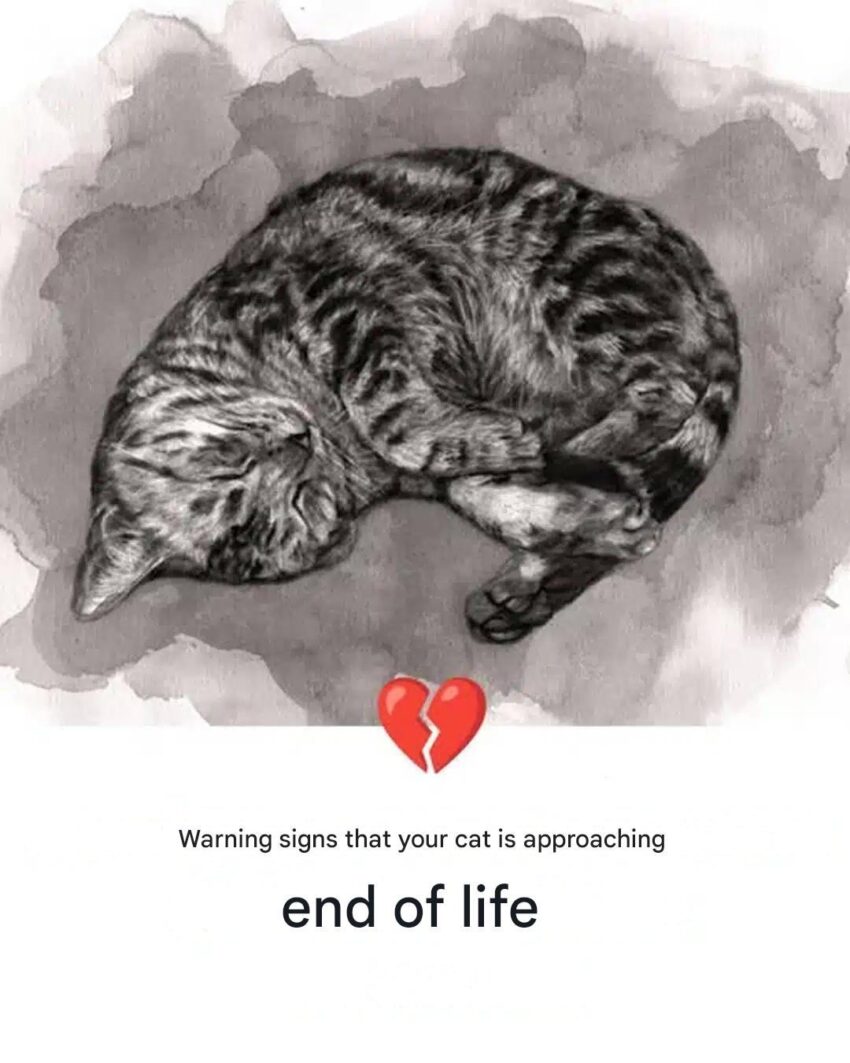
11 Signs a Cat May Be Dying
-
Loss of appetite and thirst
Refusing food or water for more than a day or two, or only taking tiny amounts. -
Extreme lethargy
Sleeping almost all the time, barely responding, or too weak to stand or walk. -
Weight loss and muscle wasting
Noticeable thinning, bony spine or hips, especially over a short period. -
Changes in breathing
Labored breathing, open-mouth breathing, very slow or very rapid breaths. -
Hiding or withdrawing
Seeking dark, quiet places; avoiding people or other pets (a strong instinct in cats). -
Poor grooming / unkempt coat
Fur looks greasy, matted, or dull because the cat no longer has energy to groom. -
Changes in body temperature
Ears and paws may feel cold; body temperature can drop below normal. -
Incontinence or litter box changes
Accidents outside the box, or not getting up to use it at all. -
Confusion or disorientation
Staring into space, getting “lost,” seeming unaware of surroundings. -
Unusual vocalization
Crying, yowling, or meowing more than usual—sometimes a sign of pain or distress. -
Lack of interest in favorite things
No response to treats, toys, affection, or people they normally love.
What to Do Now
-
Contact a veterinarian as soon as possible. Some conditions that look like end-of-life signs are painful but treatable.
-
Ask about pain management, quality of life, and whether hospice or palliative care is appropriate.
-
If it is truly the end, a vet can help ensure your cat is comfortable and not suffering.
If you want, tell me what signs you’re seeing and your cat’s age/medical history, and I can help you think through next steps or questions to ask your vet. You don’t have to go through this alone. 🐾
