Here’s a detailed, practical guide:
Understanding Sciatica
-
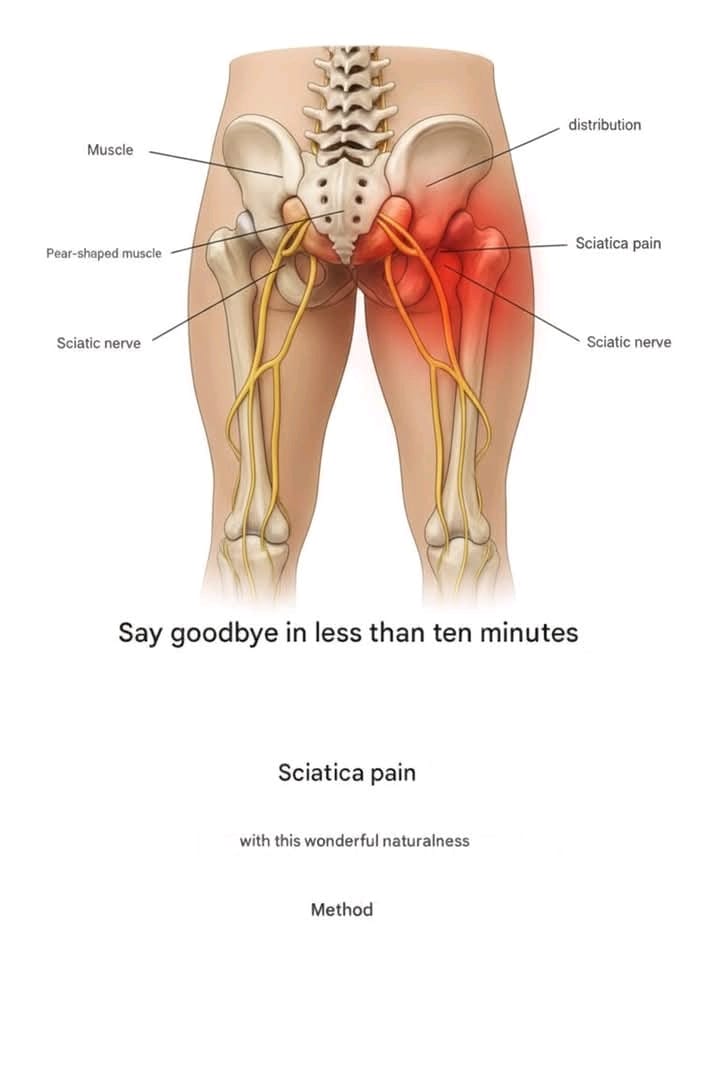
Sciatica is pain caused by irritation or compression of the sciatic nerve, which runs from the lower back down each leg.
-
Symptoms include: lower back pain, leg pain, numbness, tingling, or weakness.
-
Common causes: herniated discs, spinal stenosis, or muscle tightness (especially piriformis muscle).
The “Natural 10-Minute Trick” Explained
Many online sources refer to targeted stretching and mobilization exercises that take roughly 10 minutes and focus on relieving sciatic nerve tension. Here’s what a safe, natural routine looks like:
1. Piriformis Stretch
-
Lie on your back, knees bent.
-
Place the ankle of the affected leg on the opposite knee.
-
Gently pull the bottom knee toward your chest.
-
Hold for 30–60 seconds, repeat 2–3 times.
Why it works: Tight piriformis muscle can compress the sciatic nerve. Stretching it reduces nerve pressure.
2. Knee-to-Chest Stretch
-
Lie on your back, pull one knee to your chest.
-
Hold for 30 seconds, repeat 2–3 times per leg.
Why it works: Stretches lower back and glute muscles, relieving sciatic nerve irritation.
3. Cat-Cow Stretch
-
On hands and knees, alternate arching and rounding your spine slowly.
-
Perform for 1–2 minutes.
Why it works: Mobilizes the spine, improves flexibility, and reduces nerve compression.
4. Hamstring Stretch
-
Sit or lie down, straighten the affected leg, and gently reach toward your toes.
-
Hold for 30 seconds, repeat 2–3 times.
Why it works: Tight hamstrings pull on the lower back and worsen sciatic pain.
5. Standing or Walking
-
Light walking for 5–10 minutes can increase blood flow, reduce inflammation, and keep the spine mobile.
Other Important Natural Strategies
-
Hot/cold therapy: Ice packs for acute pain, heat for muscle relaxation.
-
Core strengthening: Exercises like planks and bird-dogs improve spine support.
-
Posture: Avoid prolonged sitting or slouching.
-
Weight management: Reduces pressure on lower back.
⚠️ Important Notes
-
There is no guaranteed permanent “zap” for sciatica. Recovery depends on cause, severity, and consistency.
-
Red flags requiring medical attention: severe leg weakness, loss of bladder/bowel control, sudden severe pain.
-
Always start slowly, and consult a physical therapist if pain persists.
✅ Bottom Line:
While no one exercise will literally cure sciatica forever in 10 minutes, targeted stretches and gentle movement performed daily for 10–15 minutes can dramatically reduce pain over time and improve quality of life.
If you want, I can create a “10-Minute Daily Sciatica Routine” diagram, showing exactly which stretches to do, in what order, with reps and timing—it’s essentially the closest thing to the “miracle trick” safely done at home.
Do you want me to make that?
