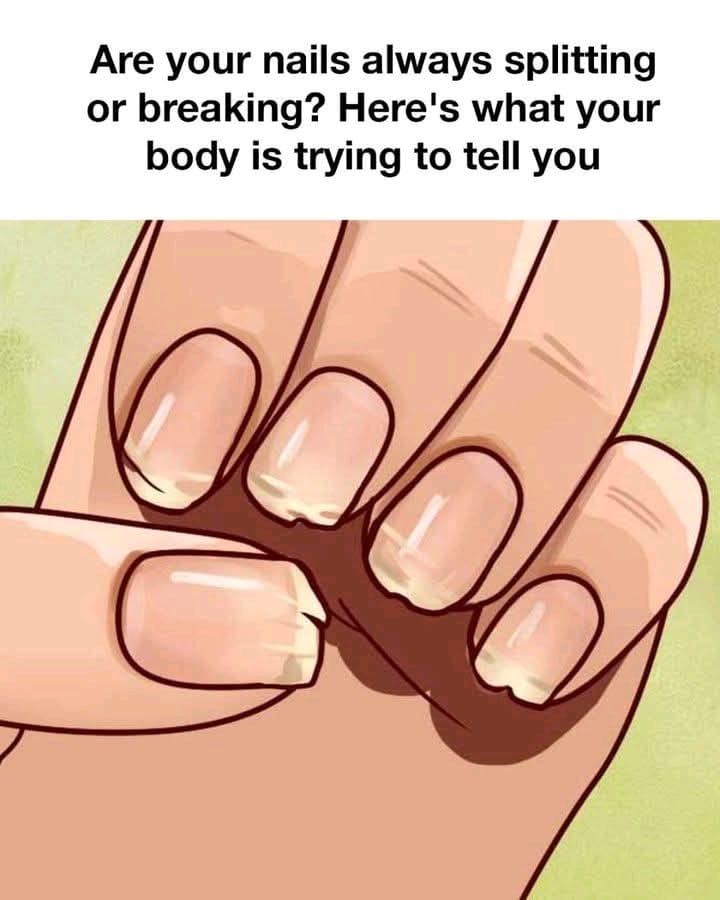
Here are some common reasons why your nails might be splitting or breaking, and what your body might be trying to communicate:
1. Nutrient Deficiencies
-
What It Means: Brittle nails are often a sign of a deficiency in essential vitamins and minerals. A lack of proper nutrition can affect the health of your nails and overall appearance.
-
Biotin (Vitamin B7): This vitamin is essential for healthy nail growth. A deficiency can cause nails to become brittle, weak, or peel easily.
-
Iron: Low levels of iron (which can lead to anemia) can cause nails to become thin and brittle. Iron is important for the proper oxygenation of your cells, and without it, your nails suffer.
-
Zinc: This mineral plays a role in cell division and growth. Zinc deficiency can result in nails that split or break easily.
-
Protein: Nails are made of keratin, a type of protein. If you’re not getting enough protein in your diet, it can affect the strength and structure of your nails.
-
-
What to Do: Ensure you’re consuming a balanced diet rich in fruits, vegetables, lean proteins, and whole grains. You may also want to consider a biotin or multivitamin supplement if you think you’re lacking certain nutrients, but it’s always best to consult with a healthcare provider first.
2. Dehydration
-
What It Means: Dry, cracked, or splitting nails can be a sign that your body is dehydrated. When you’re not getting enough water, your nails can become dry and brittle because they lack the moisture needed to stay flexible.
-
What to Do: Ensure you are drinking enough water throughout the day (about 8 glasses or more depending on your activity level). Hydrating your body properly will also benefit your skin and hair, in addition to your nails.
3. Thyroid Imbalance
-
What It Means: Your nails can reveal clues about your thyroid health. If you’re experiencing splitting nails along with other symptoms like fatigue, hair thinning, weight changes, or sensitivity to cold, you may have a thyroid issue such as hypothyroidism (underactive thyroid).
-
Hypothyroidism can slow down your metabolism and impair the growth and health of your nails.
-
-
What to Do: If you suspect thyroid issues, it’s important to consult with a doctor for a blood test to check your thyroid hormone levels. Thyroid treatment can help improve the health of your nails over time.
4. Underlying Health Conditions
-
What It Means: Certain health conditions can lead to chronic nail problems. Some of these conditions include:
-
Psoriasis: This skin condition can also affect your nails, causing them to become pitted, discolored, or brittle.
-
Eczema: People with eczema can also experience nail changes, including dryness, cracking, or splitting.
-
Diabetes: Poor circulation, a common issue for people with diabetes, can result in weakened nails. High blood sugar can also impair the health of your skin and nails.
-
-
What to Do: If you’re experiencing other symptoms alongside splitting nails, or if your nails are not improving with basic care, it’s worth speaking with a doctor to rule out any underlying health issues.
5. Frequent Use of Harsh Chemicals
-
What It Means: Regular exposure to harsh chemicals or cleaning products can weaken your nails. The nail polish remover, detergents, or even frequent hand washing can strip away natural oils, leaving nails dry and prone to damage.
-
What to Do:
-
Wear gloves when using cleaning products or washing dishes.
-
Use gentle nail polish removers without acetone and opt for moisturizing nail products.
-
Regularly apply cuticle oil or a moisturizing hand cream to keep nails and skin hydrated.
-
6. Trauma or Physical Damage
-
What It Means: Sometimes, physical damage to the nail (such as banging or using nails as tools) can cause them to break or split. This is more common in people who frequently use their nails for rough tasks or have an active lifestyle.
-
What to Do: If physical trauma is causing damage, consider trimming your nails regularly and using a protective coat of clear nail polish or nail strengthener. Also, try to be more cautious when handling tasks that put strain on your nails.
7. Hormonal Changes
-
What It Means: Hormonal fluctuations, especially those related to pregnancy, menopause, or birth control, can affect the health of your nails. During pregnancy, many women experience stronger nails, but after childbirth, some may experience brittle nails due to hormonal changes.
-
What to Do: If hormonal changes are affecting your nails, try to focus on a nutritious diet, stay hydrated, and practice good nail care. If symptoms persist, consult with your doctor to evaluate potential treatments.
8. Overuse of Nail Products
-
What It Means: Excessive use of nail polish, artificial nails, or gel manicures can weaken the nails over time. These products can prevent the nails from “breathing” and may lead to thinning or splitting.
-
What to Do: Give your nails a break from frequent use of nail polish or artificial nails. Let them breathe and recover. Regularly apply nail oils to keep them moisturized, and consider using strengthening nail treatments.
How to Improve Nail Health:
-
Keep nails moisturized with cuticle oil or hand cream.
-
Trim nails regularly to avoid unnecessary stress on them.
-
Eat a balanced diet rich in biotin, vitamin E, zinc, and iron to support healthy nails.
-
Stay hydrated and avoid overexposure to chemicals or harsh conditions.
Conclusion:
If your nails are constantly splitting or breaking, it’s your body’s way of telling you that something might be out of balance, whether it’s due to nutrient deficiencies, dehydration, hormonal changes, or underlying health conditions. By addressing the root cause, such as improving your diet, practicing better nail care, or seeking medical advice if necessary, you can restore your nails to a healthier state.
If the issue persists or is accompanied by other concerning symptoms, consider consulting a doctor to rule out any medical conditions. Would you like tips on specific nail care routines or further details on any of the possible causes?
