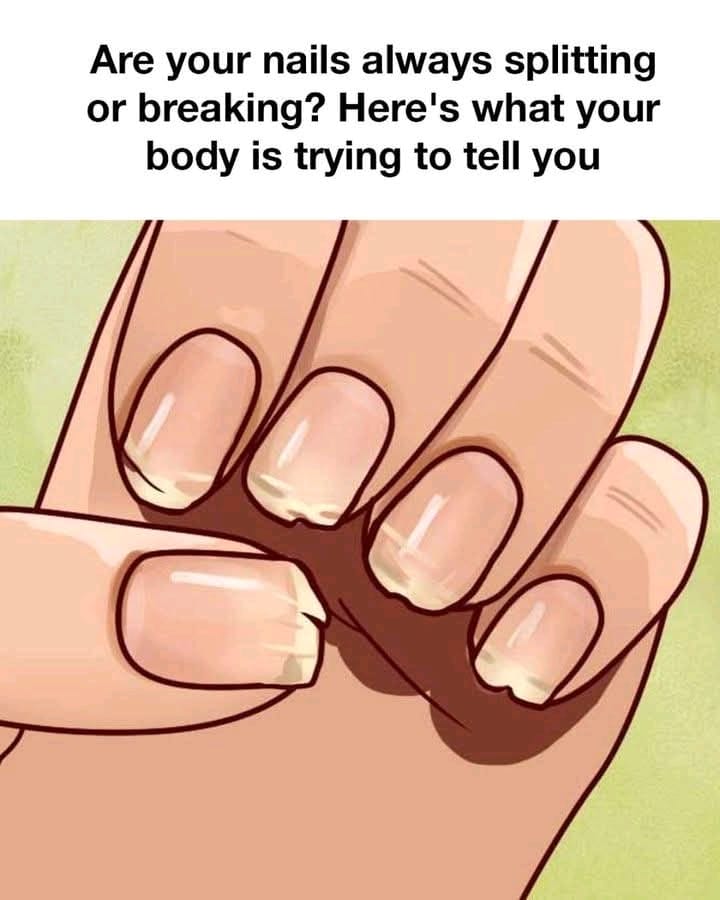
1. Nutrient Deficiencies
What It Means: Brittle nails are often linked to deficiencies in certain vitamins and minerals that are essential for healthy nail growth.
Common Deficiencies:
-
Biotin (Vitamin B7): Biotin is crucial for keratin production, which helps strengthen your nails. A lack of biotin can cause your nails to become thin, brittle, and prone to breaking.
-
Iron: A deficiency in iron (often linked to anemia) can cause nails to become weak, thin, and brittle.
-
Zinc: Zinc is important for tissue growth and repair. A lack of zinc can lead to poor nail growth, thinning, and splitting.
-
Vitamin D: Low levels of vitamin D may impair calcium absorption, which in turn weakens nails.
What to Do:
-
Eat a diet rich in biotin (eggs, nuts, and seeds), iron (leafy greens, legumes, and lean meats), zinc (pumpkin seeds, legumes, and shellfish), and vitamin D (fatty fish, fortified dairy products).
-
Consider supplements after consulting with a healthcare provider.
2. Dehydration
What It Means: Just like your skin, your nails need moisture to stay strong. Dehydration can cause nails to become dry and brittle, leading to splitting and breaking.
Why It Happens:
-
When you’re dehydrated, your body lacks the water it needs to keep cells (including those in your nails) hydrated and functioning properly.
What to Do:
-
Drink plenty of water throughout the day to keep your body—and nails—hydrated. Aim for at least 8 cups per day, more if you’re active or in a hot climate.
-
Apply a moisturizing nail oil or cuticle cream regularly to your nails and cuticles to lock in moisture.
3. Thyroid Imbalance
What It Means: Hypothyroidism (underactive thyroid) can lead to dry, brittle nails that break easily. The thyroid gland produces hormones that regulate metabolism, and when it’s not functioning properly, it can affect various body systems, including your skin and nails.
Why It Happens:
-
When the thyroid doesn’t produce enough hormones, it can slow down cellular turnover, which leads to weaker nails and hair.
What to Do:
-
If you suspect a thyroid issue (along with other symptoms like fatigue, weight gain, and cold sensitivity), consult with your doctor for a thyroid function test.
4. Hormonal Changes
What It Means: Hormonal changes, especially those related to pregnancy, menopause, or the use of birth control pills, can affect the strength and health of your nails.
Why It Happens:
-
Estrogen helps promote strong hair and nails, and fluctuations in this hormone (such as during pregnancy or menopause) can lead to changes in your nails’ appearance and texture.
What to Do:
-
Be mindful of changes that occur during significant hormonal shifts. Managing stress and maintaining a healthy diet rich in vitamins can help support your nails during these times.
5. Poor Nail Care Habits
What It Means: Sometimes, nails break or split because of poor nail care practices, such as frequent use of nail polish removers, neglecting nail hygiene, or using nails as tools for opening things.
Why It Happens:
-
Harsh chemicals like acetone (in nail polish remover) can dry out and weaken nails. Similarly, frequent exposure to water, especially without moisturizing afterward, can lead to dry, brittle nails.
What to Do:
-
Avoid acetone-based nail polish removers and choose gentler, acetone-free formulas.
-
Trim nails regularly to prevent them from becoming too long and prone to snagging or breaking.
-
Wear gloves when doing household chores or working with harsh chemicals or water.
6. Stress and Anxiety
What It Means: Stress can lead to nail issues, including brittleness and splitting. Nail-biting (which often accompanies anxiety) can also lead to weak nails and breakage.
Why It Happens:
-
Stress and anxiety can trigger hormonal fluctuations or nutrient deficiencies, leading to weak nails. Nail-biting can also cause physical damage to the nail matrix (the area where nail growth begins).
What to Do:
-
Practice stress management techniques, such as meditation, yoga, or breathing exercises.
-
If you struggle with nail-biting, consider using bitter nail polish or another method to break the habit.
7. Aging
What It Means: As you age, your body naturally produces less collagen, and nails can become thinner, more brittle, and prone to splitting.
Why It Happens:
-
Collagen is the protein that helps keep your nails strong and elastic. As collagen production decreases with age, your nails may become more fragile.
What to Do:
-
Ensure you’re eating foods that support collagen production, such as those rich in vitamin C (citrus fruits, strawberries, bell peppers) and protein (chicken, fish, legumes).
-
Consider using collagen supplements if recommended by your healthcare provider.
8. Infection or Fungal Issues
What It Means: Fungal infections (like onychomycosis) can cause nails to become discolored, thickened, and brittle.
Why It Happens:
-
Fungal infections can infiltrate the nails, causing them to weaken, split, or even detach from the nail bed.
What to Do:
-
If you notice discoloration, pain, or swelling around your nails, see a doctor for treatment. Antifungal medications or topical treatments may be required.
What You Can Do to Improve Nail Health:
-
Diet: Ensure you’re getting a balanced diet that’s rich in vitamins and minerals like biotin, vitamin D, iron, zinc, and protein. These are essential for healthy nails.
-
Hydration: Drink plenty of water to keep your nails and skin hydrated.
-
Moisturize: Use nail oils or cuticle creams to keep nails and surrounding skin hydrated.
-
Gentle Nail Care: Avoid harsh chemicals and practice gentle nail care to prevent unnecessary damage.
Conclusion:
Splitting or breaking nails can often be a sign that something in your body is out of balance, whether it’s a nutrient deficiency, hormonal imbalance, or poor nail care habits. By making dietary adjustments, managing stress, and taking care of your nails, you can improve their strength and prevent further damage.
If your nails continue to break despite changes in your diet or care routine, consider consulting with a healthcare professional to rule out any underlying health conditions.
Would you like more tips on nail care or want to dive deeper into any of these causes? Let me know!
